Why Red Clay, And Not White Porcelain
Red clay is not a colour we chose. It is the body of the material, and almost everything a guest notices about one of our plates follows from that single fact.
The body, not the surface
Most tableware begins with a white body. The white is there so that whatever is applied on top — a pattern, a colour, a logo — reads exactly as it was drawn. That is a legitimate way to make a plate, and for some tables it is the right one. It is simply not what we do.
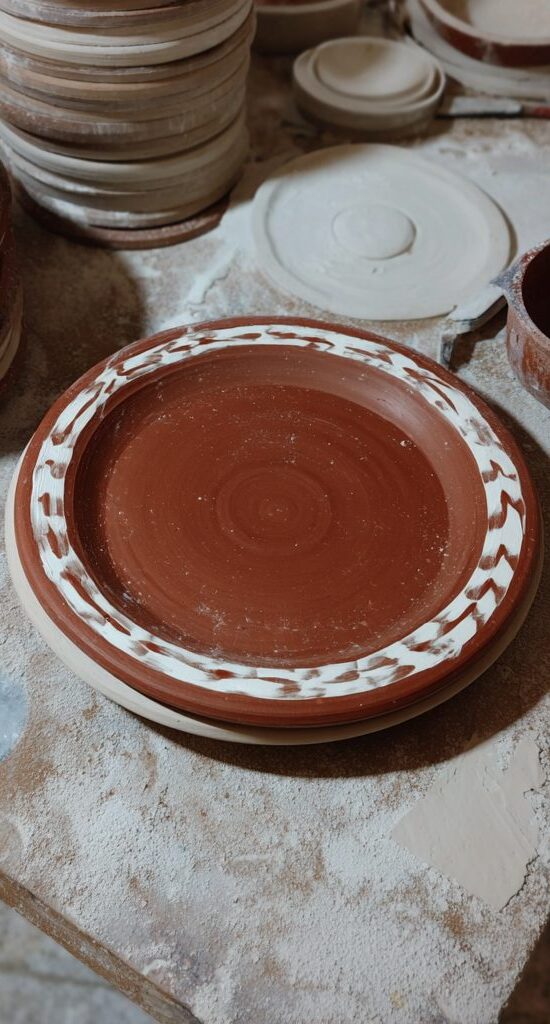
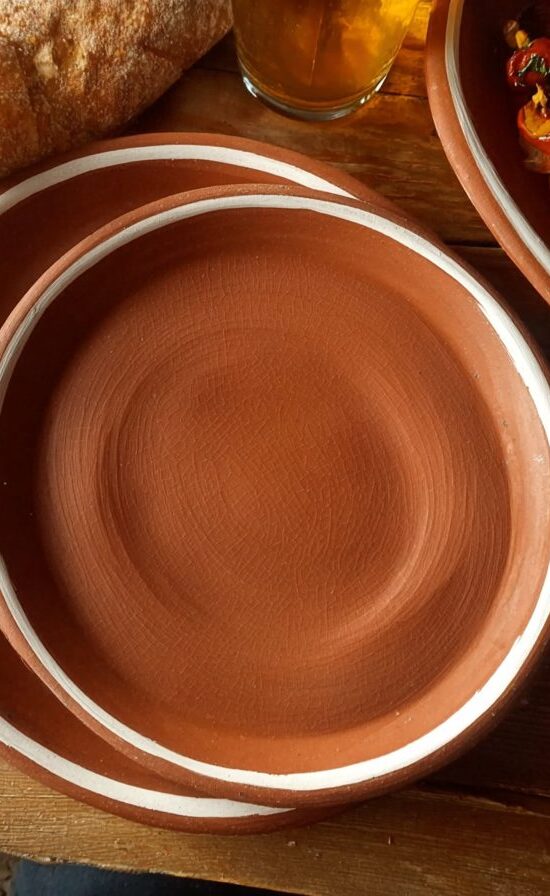
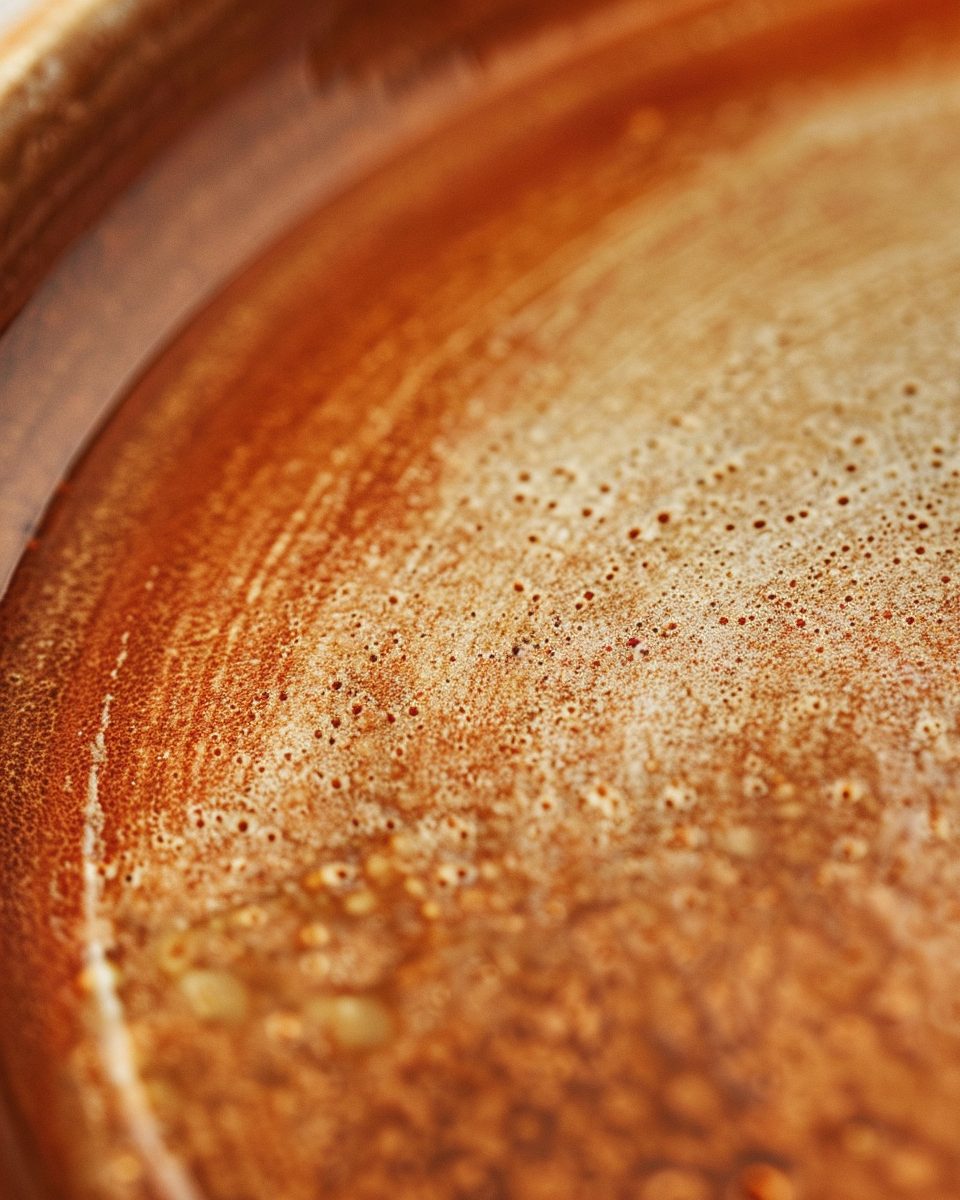
Our pieces begin with iron-rich red clay. Under a transparent or semi-matte glaze the body pushes gently through: colour gathers in the recesses, thins over the edges, and deepens where the wall thickens. You are not looking at a coat of terracotta paint. You are looking at the plate itself.
Why it matters at a table
A red clay surface is warm before the food arrives. It carries a low, even tone that sits under almost every plate a kitchen sends out: char, olive oil, lemon, yoghurt, roasted vegetables, dark meat, coffee. White porcelain competes with colour; red clay agrees with it.
There is a second, quieter effect. Because the body is dense and the walls are generous, a red clay plate holds heat longer than a thin white one. A dish that takes twelve minutes to eat is still warm at the last bite. Guests rarely name this. They only notice that the food felt cared for.
The part we are honest about
Red earthenware is not vitrified hotelware, and we do not describe it as such. It is a softer, more porous body with a glaze that lives on top of it, which means three things a professional buyer should hear before ordering, not after:
- Thermal shock is the real enemy. Straight from a cold shelf into a hot oven, or from a hot rack into cold water, is how a glaze is weakened.
- Fine crazing — a web of hairlines in the glaze — is a known characteristic of glazed earthenware over time, not a manufacturing failure. Producers of hand-decorated earthenware say so in their own care notes.
- During the sample stage we ask for hand washing, because that is how we learn what your service actually does to the piece.
We do not publish laboratory figures we have not run ourselves. What we offer instead is a sample set and a testing period in your own kitchen, with your own dishwasher, your own racks and your own pass.
Fire, twice
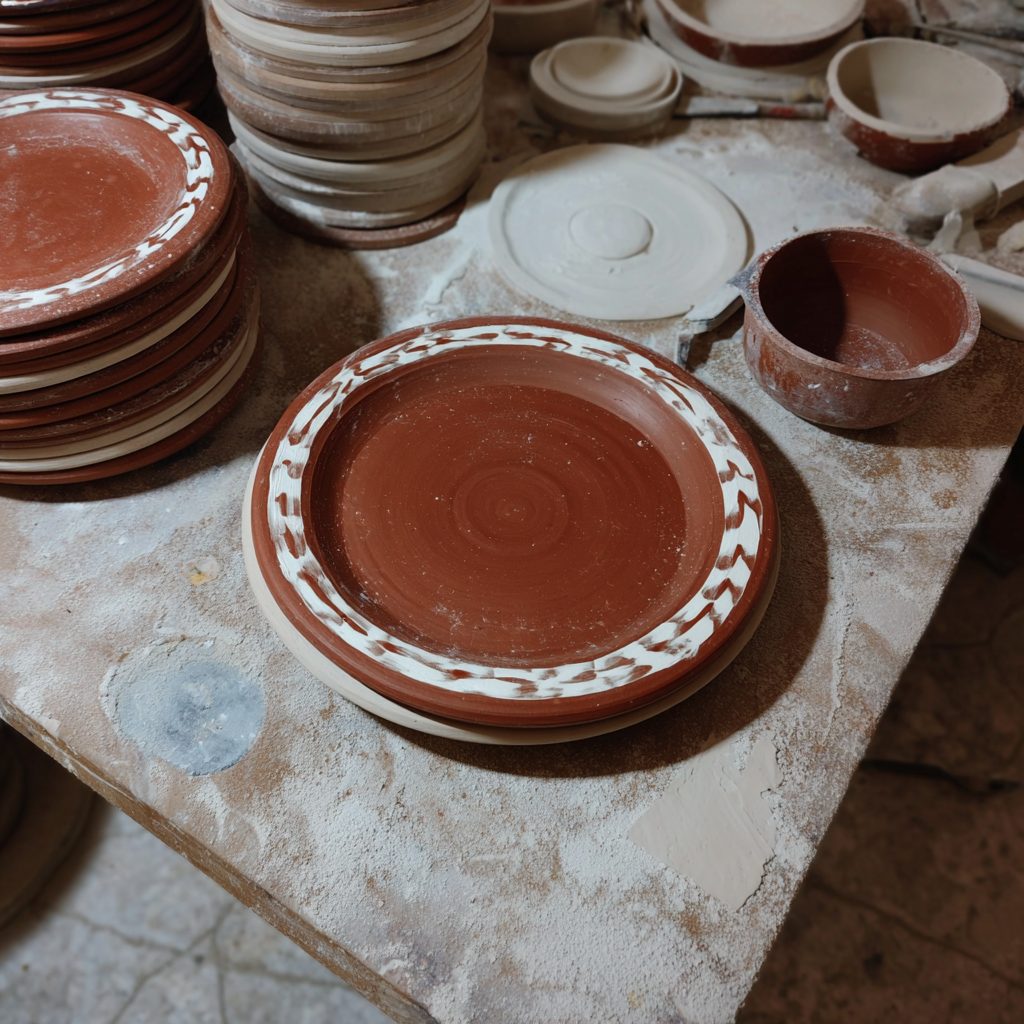
Every piece goes through the kiln more than once: once to turn clay into a biscuit that can be handled, once more to fuse the glaze to it. Decoration is painted by hand between those firings. This is slow, and it is the reason we ask clients to begin with twelve to eighteen pieces rather than a full service.
Begin small. Put the pieces under real service for a few weeks. Then decide.
CERAMICA NICEA works from a single atelier in İznik. Project enquiries: projects@ceramicanicea.com · +90 541 604 38 73. Everything begins with a sample set on your own table, under your own service.