
Why red clay
Because the plate should
speak the language of the fire.
A brief guide for chefs, hoteliers and designers — written the way we would explain it across a table, without a datasheet.
01 · The material
Iron in the body,
not pigment on the surface.
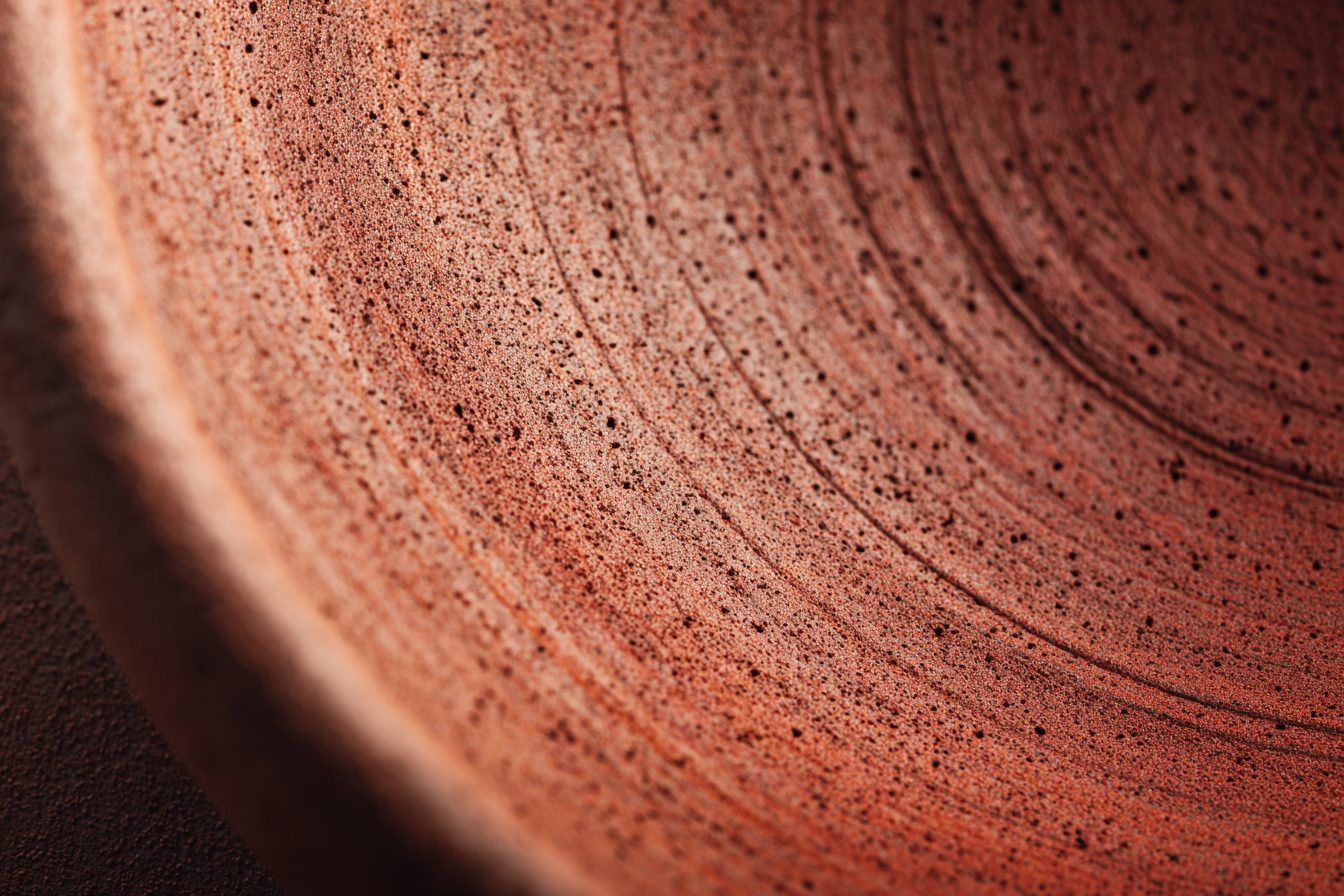
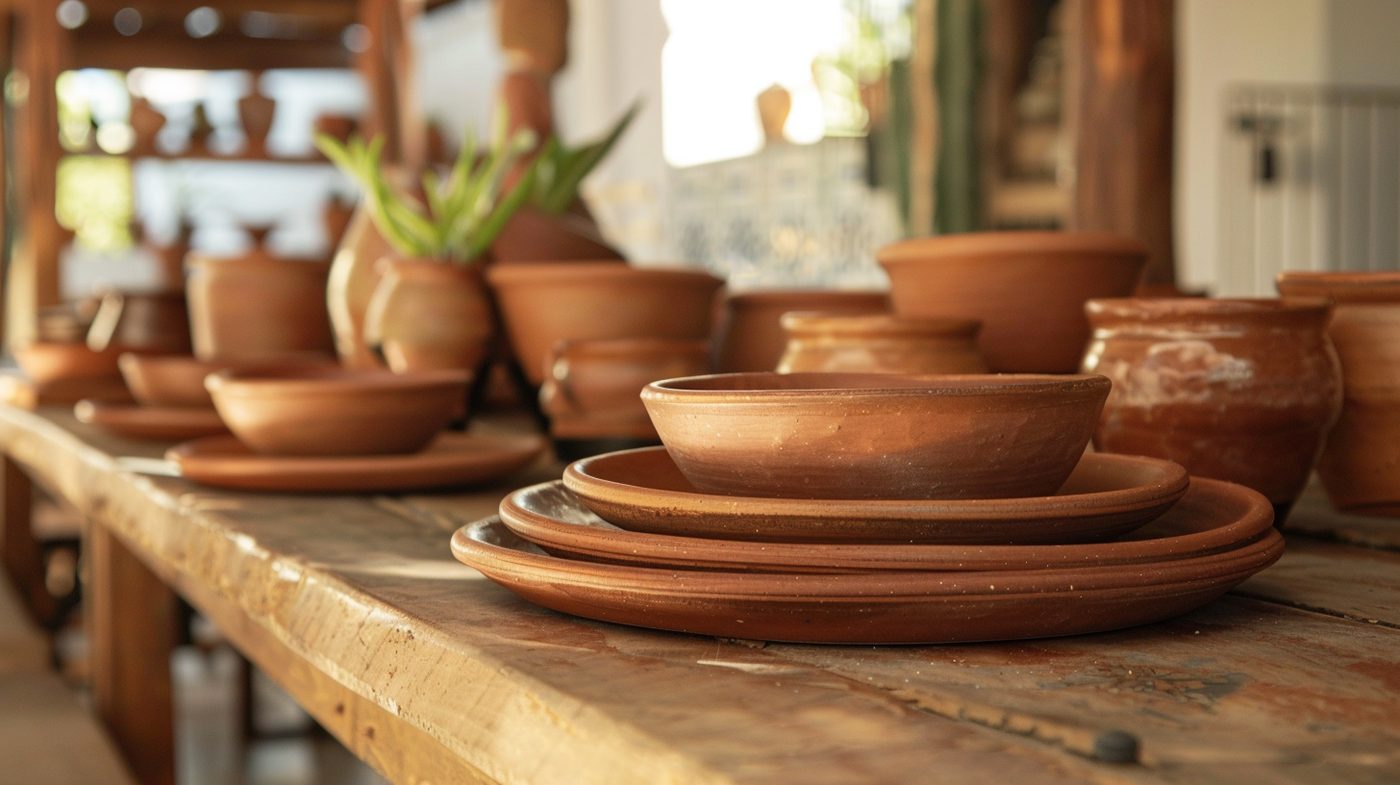
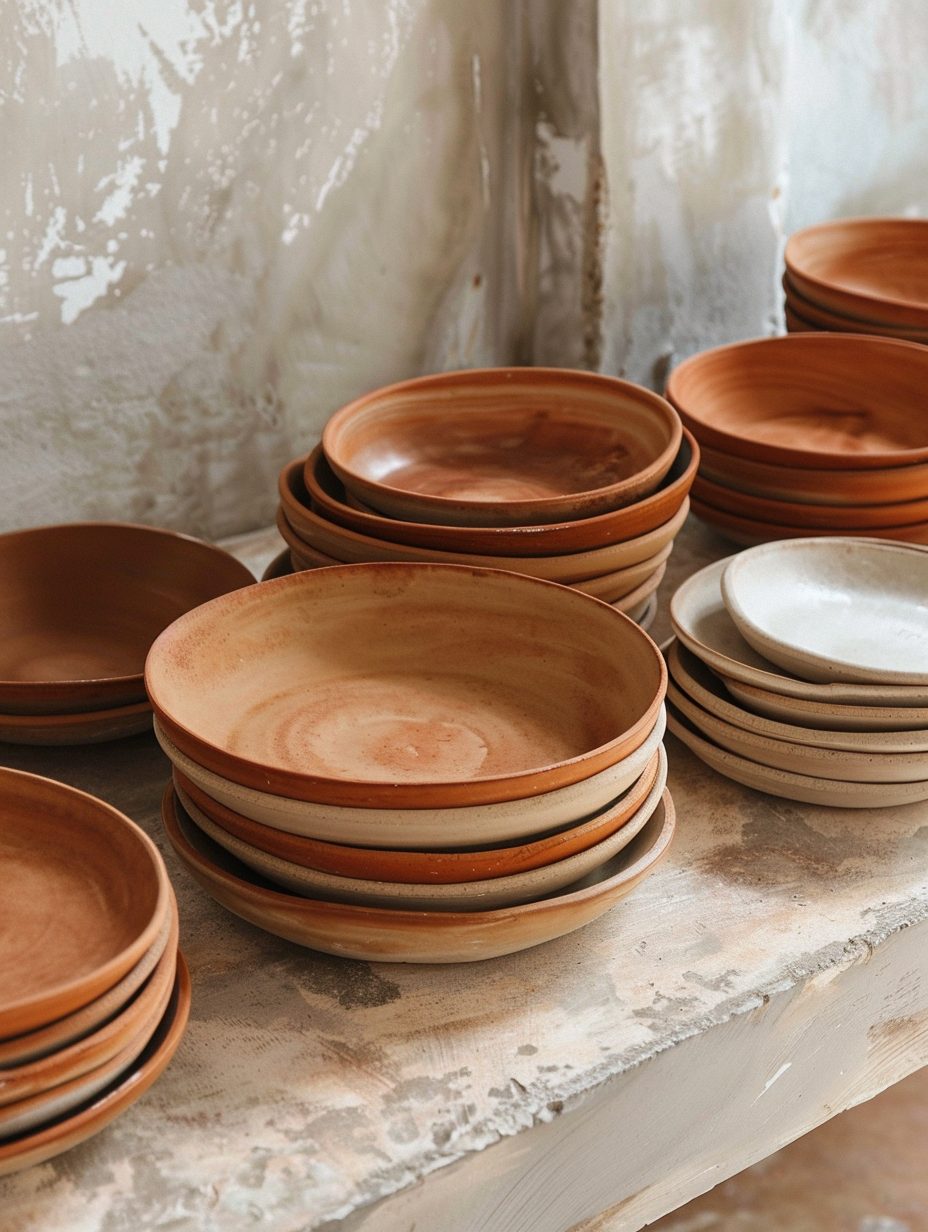
Red clay bodies are naturally rich in iron. Fired, they turn the colour of soil, brick and ember. That colour is not painted on; it is the clay. Chip a red clay plate and the edge is the same colour as the face — which is precisely why a mark on it does not read as a wound.
02 · The table
Food looks closer
on a warm ground.
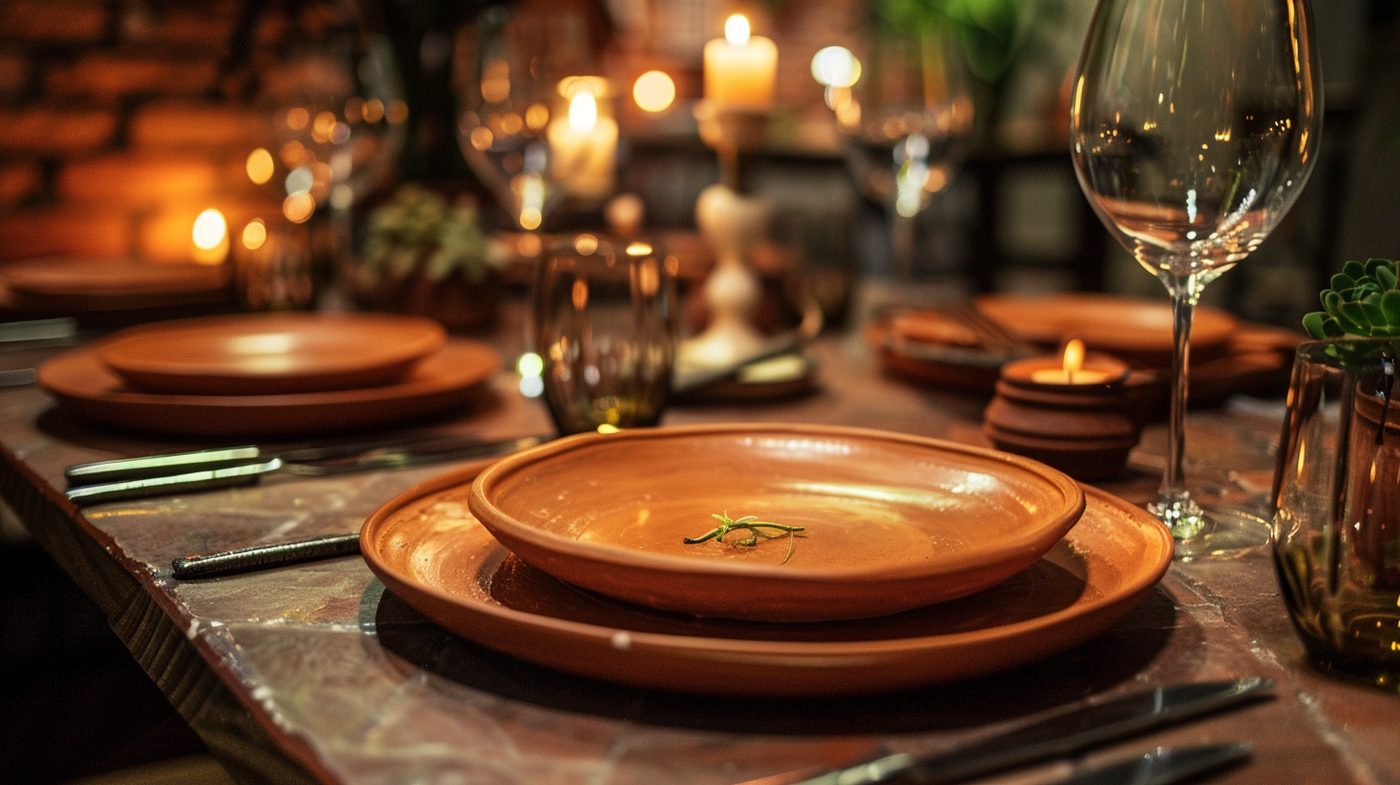
White porcelain was designed to disappear. That is a legitimate choice, and for some rooms it is the right one. But grill marks, wood smoke, roasted vegetables, reduced sauces and dark bread all belong to the world of flame and earth — and they look more honest on a surface that already belongs there too.
Red clay works especially well for grill and steak concepts, wood-fired kitchens, farm-to-table and New Anatolian menus, and Aegean meze service.
03 · The making
A modest fire,
a serious body.
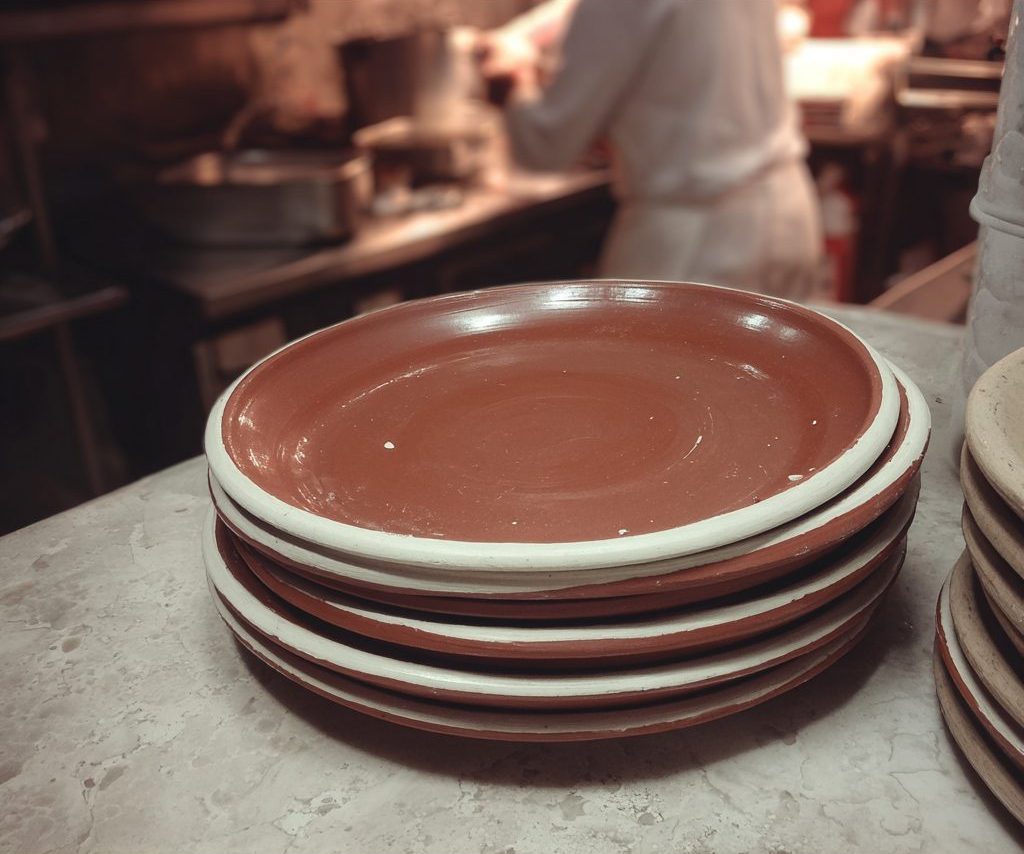
Red clay matures at a lower firing temperature than very high-fired bodies while still reaching the density daily service asks for. Lower firing means less energy for every piece — an argument we make quietly, because sustainability is a practice and not a badge.
Clay-based ceramics are long-lived, food-safe and chemically inert. They are not designed to be replaced at the end of a season.
04 · The honest part
What red clay
is not.
Red clay is earthenware. It is more porous than vitrified hotelware, it does not like sudden temperature change, and over years of hard service a fine web can appear in the glaze. Traditional earthenware houses treat that web as a natural characteristic of the material rather than as a fault.
So we are precise about position. For high-volume banquet service and punishing dishwasher cycles, keep your vitrified porcelain. For the plates a guest looks at, holds and photographs, use clay.
And we publish no technical figures for this line yet, because we are still testing it with you at sample stage. When we have numbers we can stand behind, they will come from your service and not from a brochure.
05 · The place
İznik is not a decoration on our label.
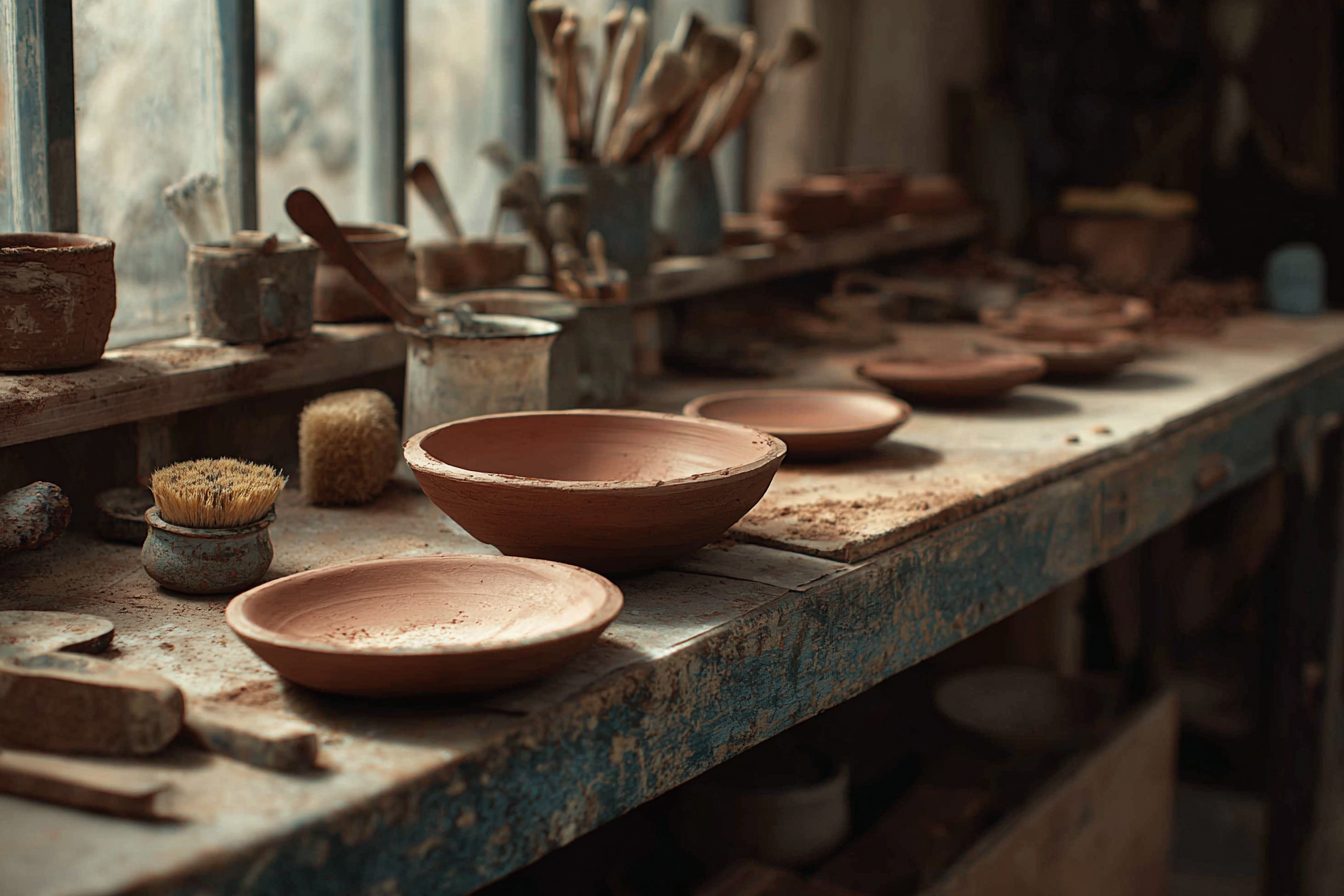
CERAMICA NICEA is not a factory brand. We design project-based collections together with selected master workshops in and around İznik, and we match the atelier, the clay body and the glaze language to each brief. One point of contact for you; deep ceramic knowledge behind it.
Next step
A short call, then a sample.
You show us your room and one to three key dishes. We come back with one or two scenarios. If it feels right we prototype; if not, you keep the thinking.