Material & surface
Which material
for which surface.
Two lines leave this atelier. They are not rivals — they answer different questions. The table asks for clay that can be used; the wall asks for tile that can be looked at.
The short version.
| Surface | Our answer | Why |
|---|---|---|
| Table top, daily service | Red clay | Warm ground under food, mass that holds heat, marks that read as patina. |
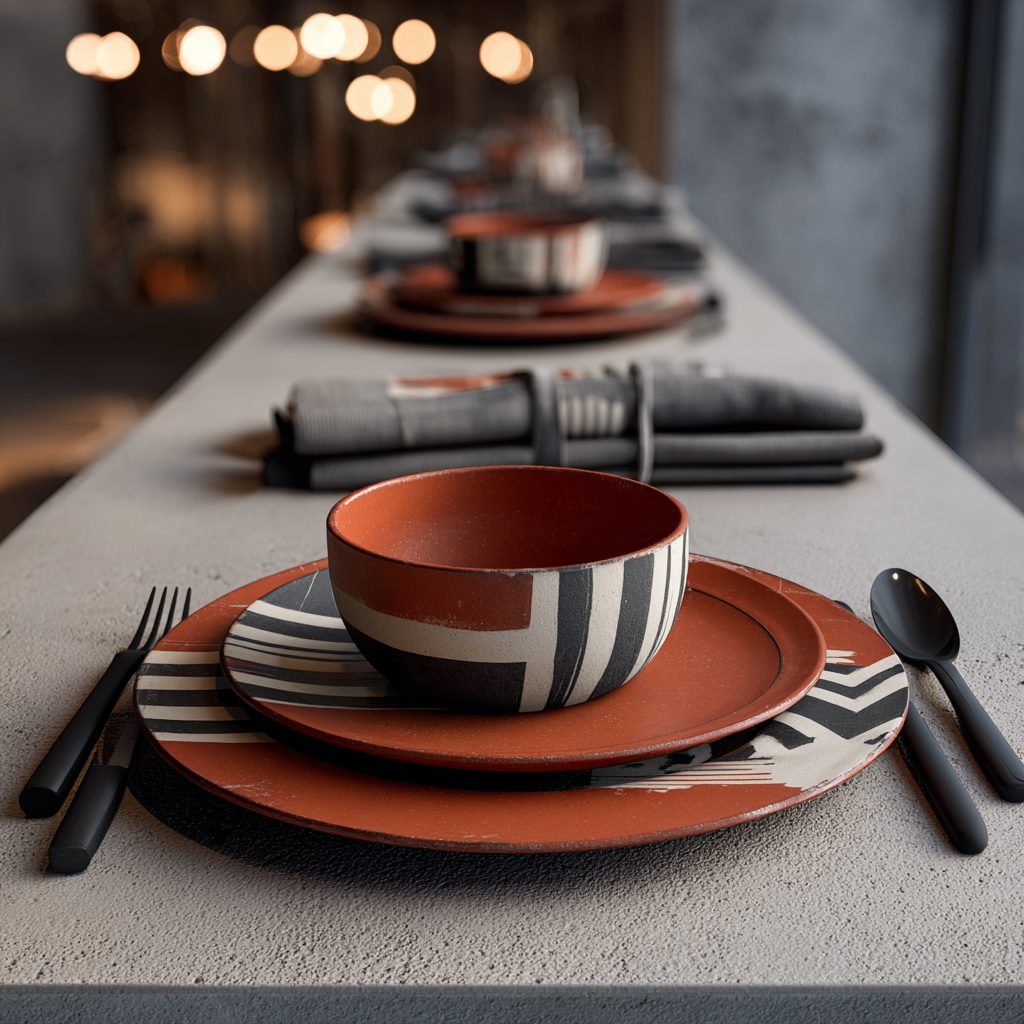
| Breakfast, meze, sharing | Red clay, patterned everyday series | Pattern at the scale of a hand; pieces guests arrange themselves. |
| Wall, panel, lobby | İznik tile & panels | A surface made to be seen from a distance and lit, not stacked and washed. |
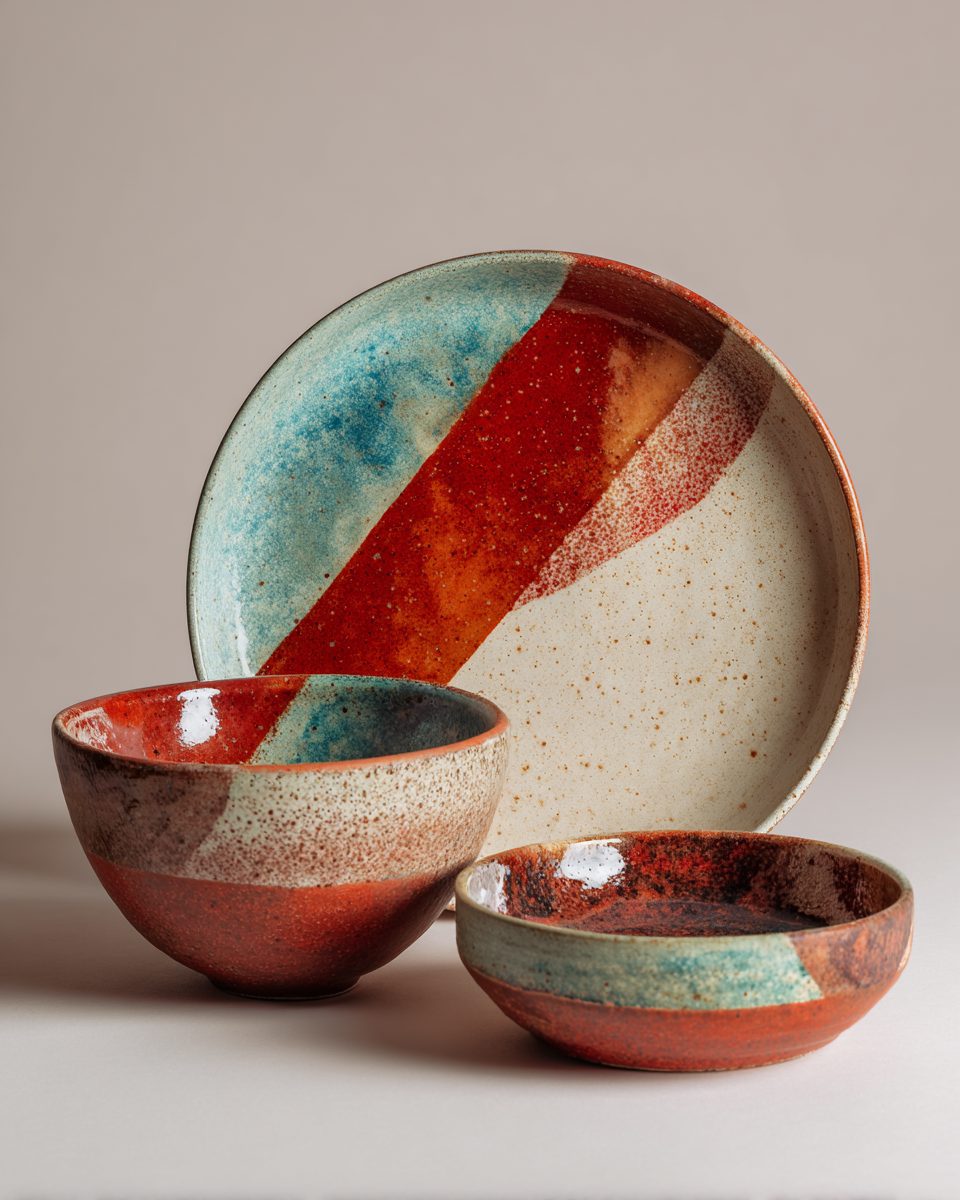
| Collection, gift, display | İznik tile, art glaze pieces | Where drawing and glaze are the subject rather than the food. |
| High-volume banquet, heavy machine cycles | Your vitrified service | Earthenware is the wrong tool for that position, and we will say so. |
Clay · for the hand
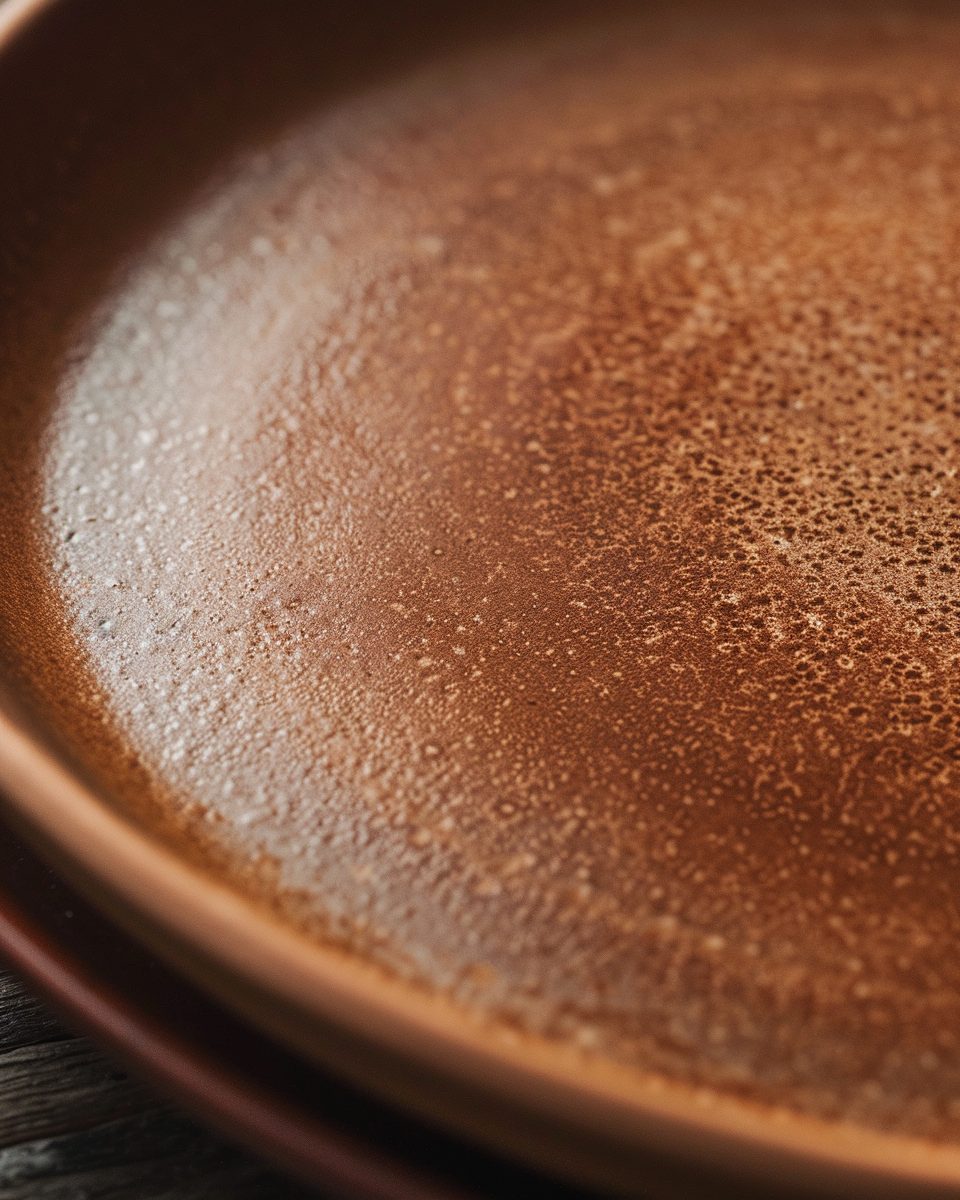
Terracotta is a working material. It is carried, stacked, wiped and reused every day, and it improves in the way a wooden table improves. Every trace it collects belongs to the same family as its own colour, so time reads as patina.
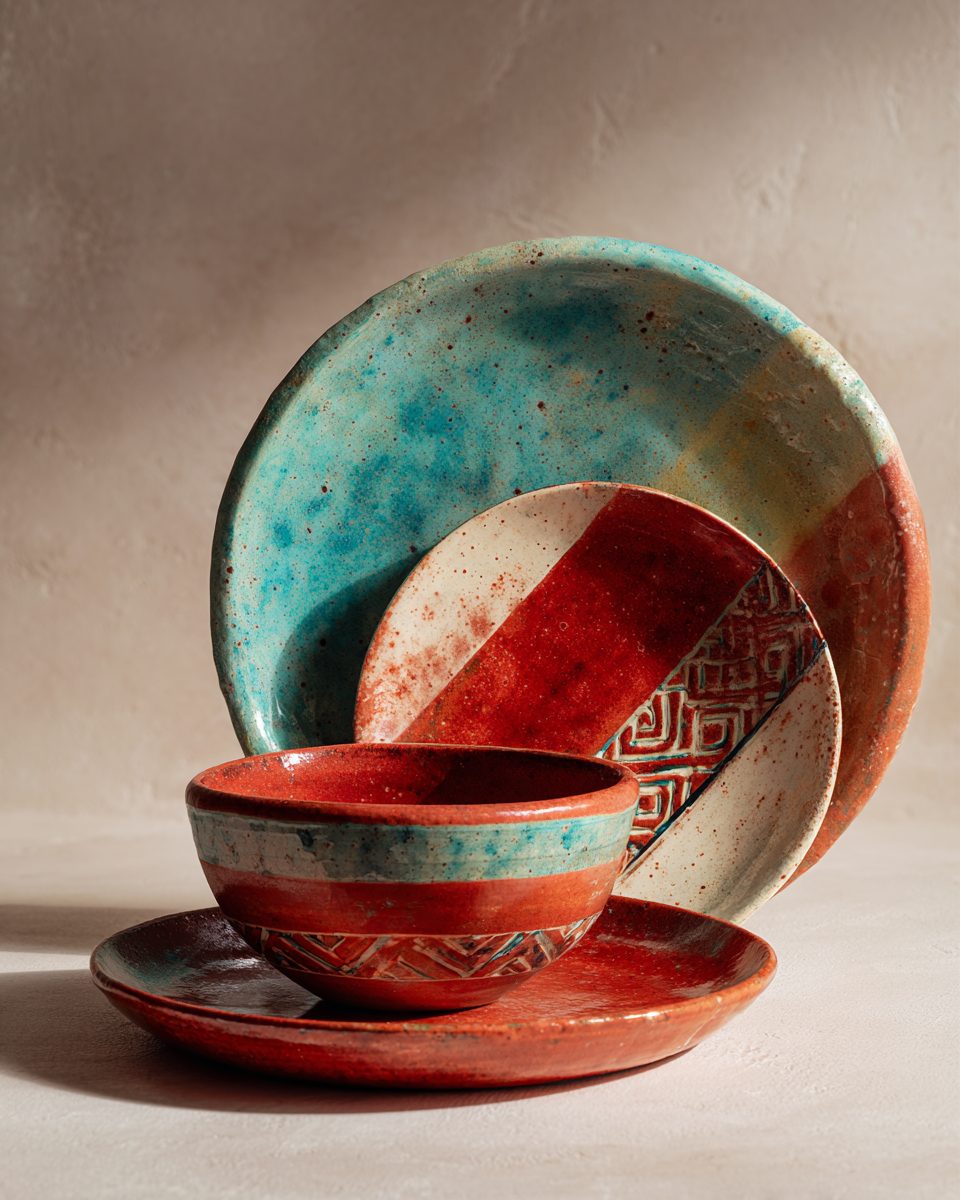
Tile · for the eye
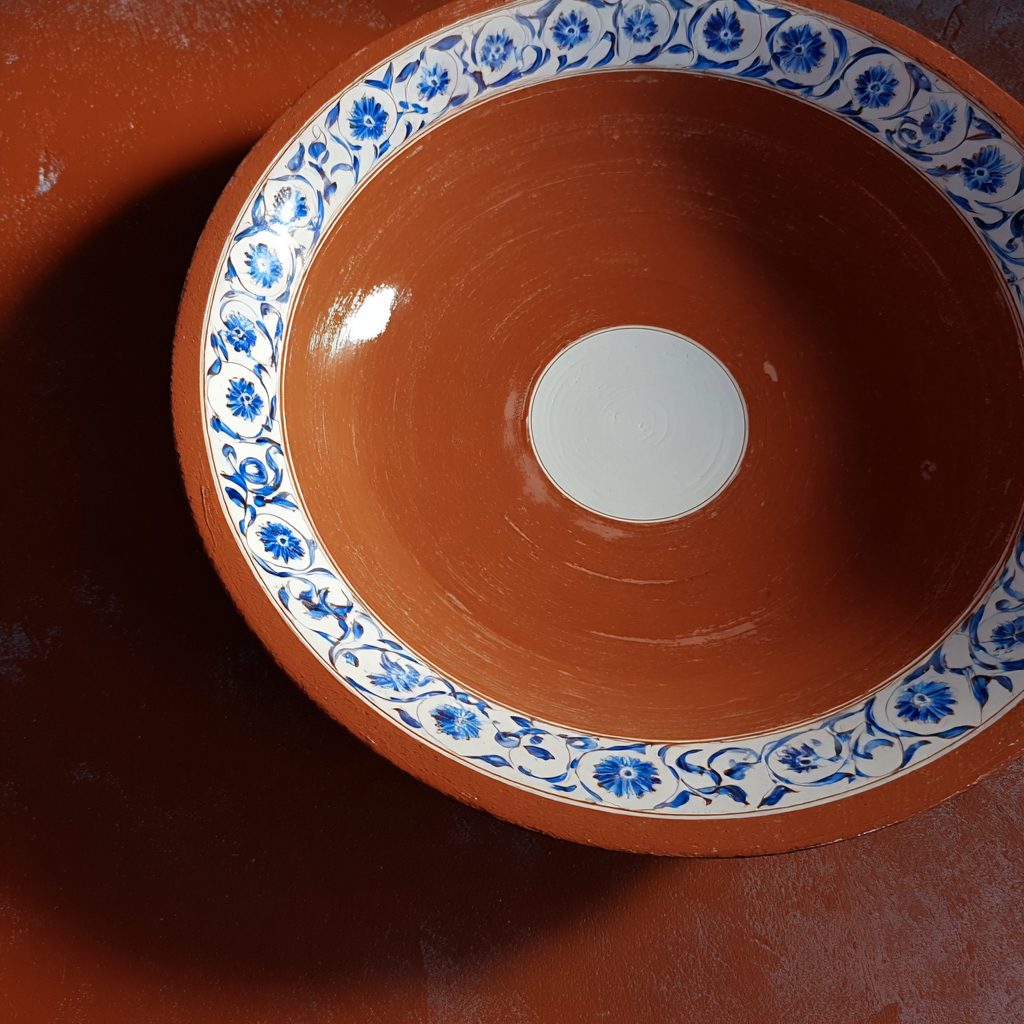
An İznik surface is drawn. Cobalt, turquoise and coral sit under a bright glaze that is meant to stay uninterrupted — which is exactly why we do not put that surface where a knife and a dishwasher will find it. On a wall it lasts for centuries.
The same trace, two readings
Why we keep the two lines apart.
Fine crazing is a known characteristic of glazed earthenware. On a terracotta body, where the clay and the glaze share the same warm register, that web disappears into the surface. On a bright blue-and-white ground, the same web is the first thing the eye finds. Nothing about the two pieces has failed differently — they are simply read differently.
So the decision is not about which material is better. It is about which surface a material is allowed to grow old on.