
For boutique hotels
Breakfast is the only
service every guest sees.
A guest may skip dinner, the bar and the terrace. Almost nobody skips breakfast — and it is the one service they photograph without being asked.
Where it earns its place
Three points in the guest journey.
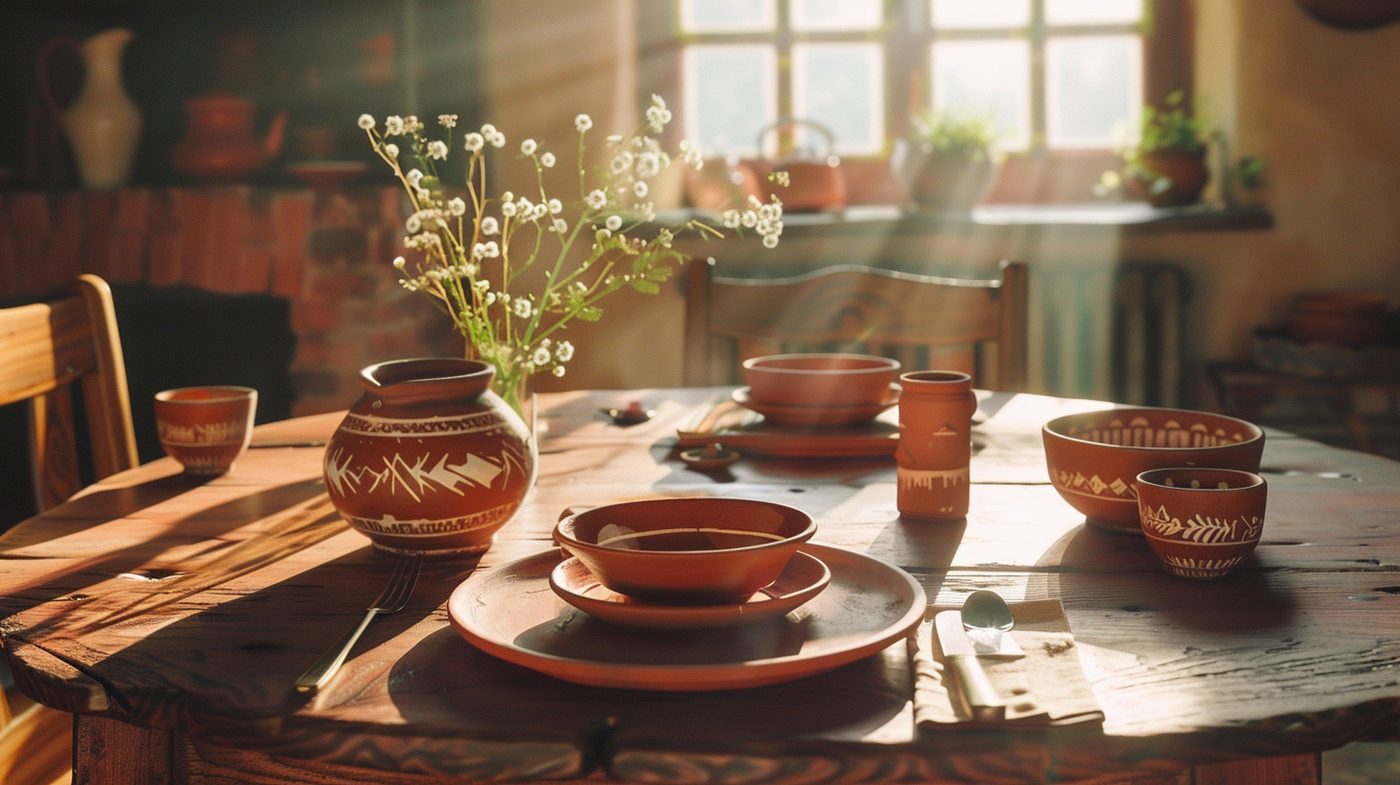
The breakfast table
Small bowls, side plates, a main plate. Warm clay under eggs, olives, cheese and jam does more for a room than a new light fitting.
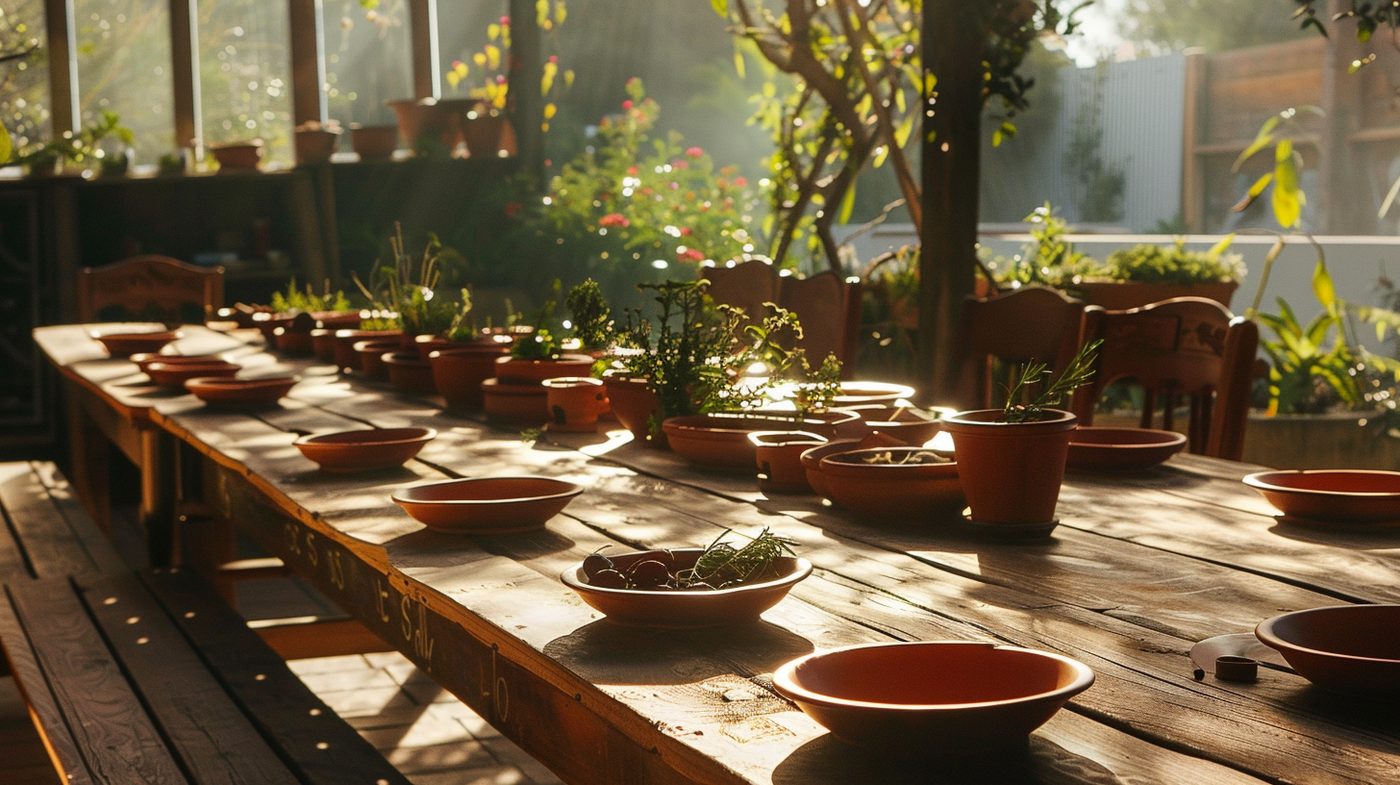
The long table
Shared tables read as one composition. Repeating one clay along the length of the table gives the room a spine.

The coffee ritual
Arrival coffee, afternoon coffee, the cup after dinner. The smallest piece in the house and the most touched.
Honest about service
What we tell hoteliers
before they order.
Red clay is an earthenware body. It is warmer, heavier and more porous than a vitrified hotel porcelain, and it is not the right answer for every position in a hotel. We say so openly, because a piece that fails in service is a bad story for both of us.
| Position | Our recommendation |
|---|---|
| Breakfast, meze, à la carte plating | Red clay, our own line |
| Signature dishes, terrace, long tables | Red clay, small dedicated batch |
| High-volume banquet, heavy dishwasher cycles | Keep your vitrified service |
| Lobby, wall, panel, collection pieces | İznik tile and art glaze |
Care
Simple rules, given in writing.
No thermal shock
Do not move a piece from the cold store straight to a hot pass, or from the oven into cold water. Sudden temperature change is what stresses a glaze — on any ceramic body.
Hand wash while we test
At sample stage we ask your team to hand wash the red clay pieces with a mild detergent. When we have enough evidence from your own service, we will tell you what we found — not before.
Stack with a cloth
An unglazed foot is slightly abrasive. A thin cloth or paper between stacked pieces protects the well of the plate below.
Fine crazing — a faint web in the glaze — is a known characteristic of earthenware and is treated as normal by traditional earthenware houses. On terracotta it reads as patina; on a blue-and-white surface the same trace reads as damage. That difference is one of the reasons we keep the two lines apart. Which material for which surface
Where to begin
One course, one ritual, twelve to eighteen pieces.
We would rather change one moment of your service properly than replace an entire inventory quickly.